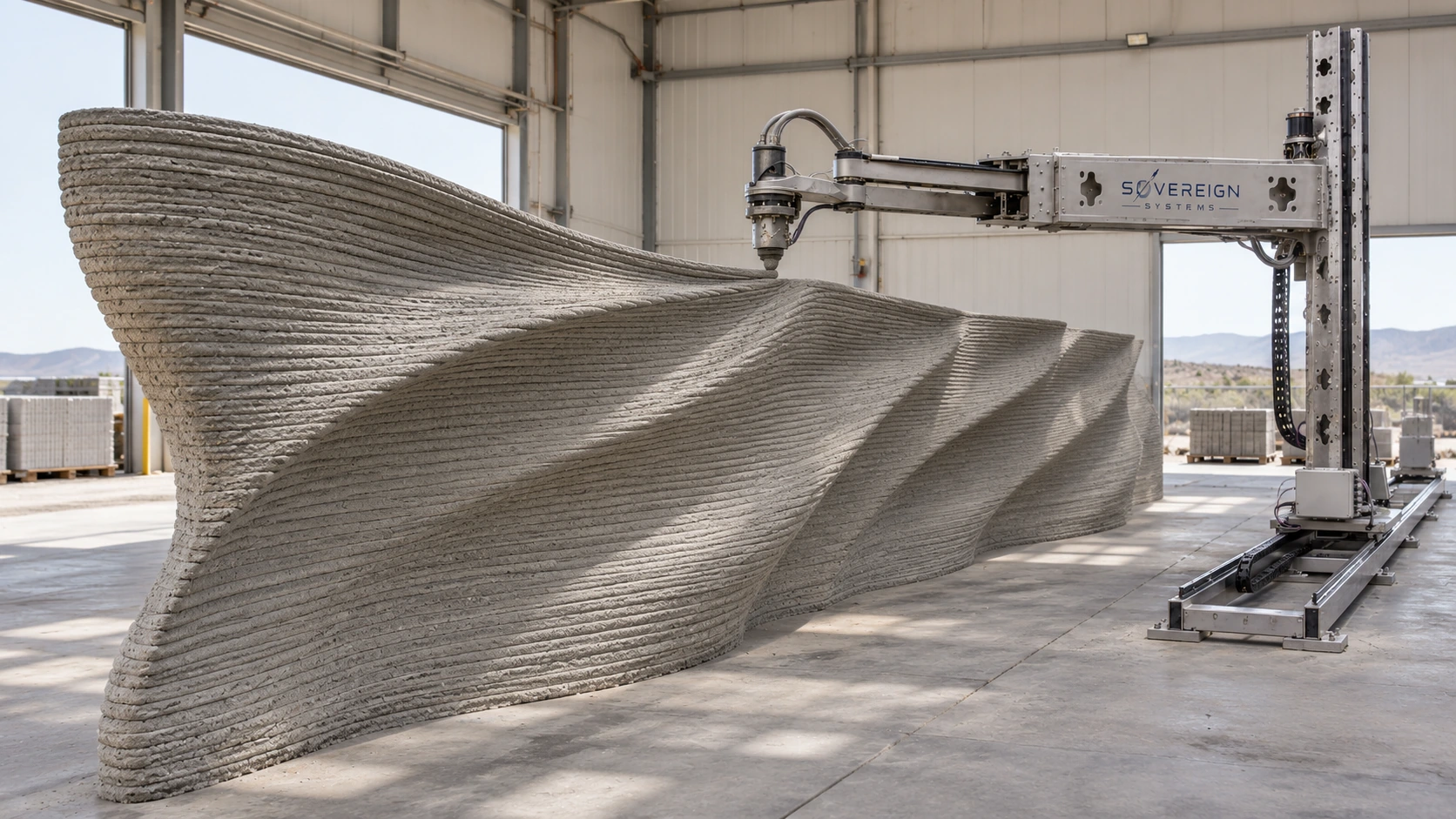
Shelters
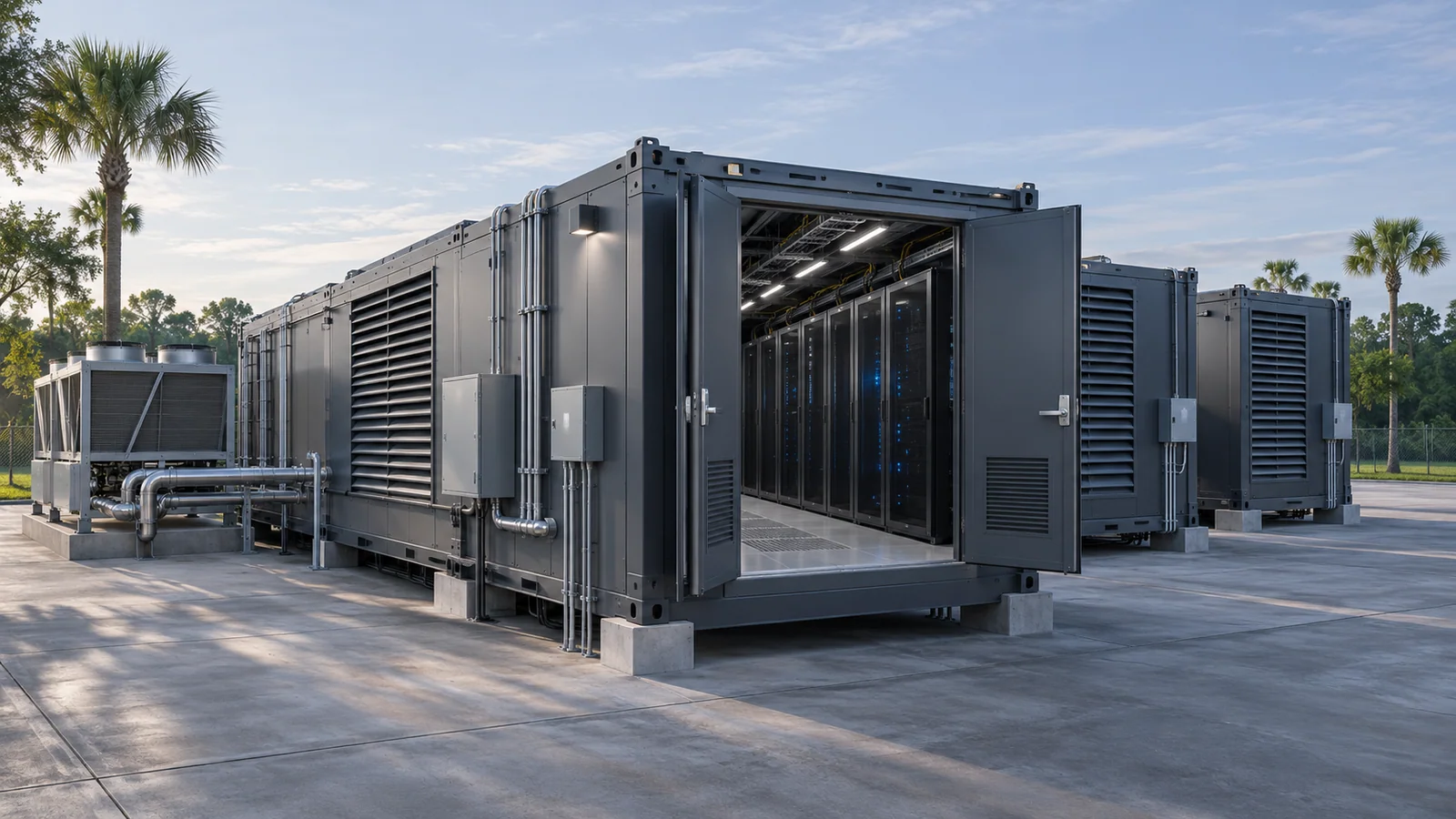
Hardened aircraft & equipment shelters
Printed protective shells for strategic assets and the systems that support them.
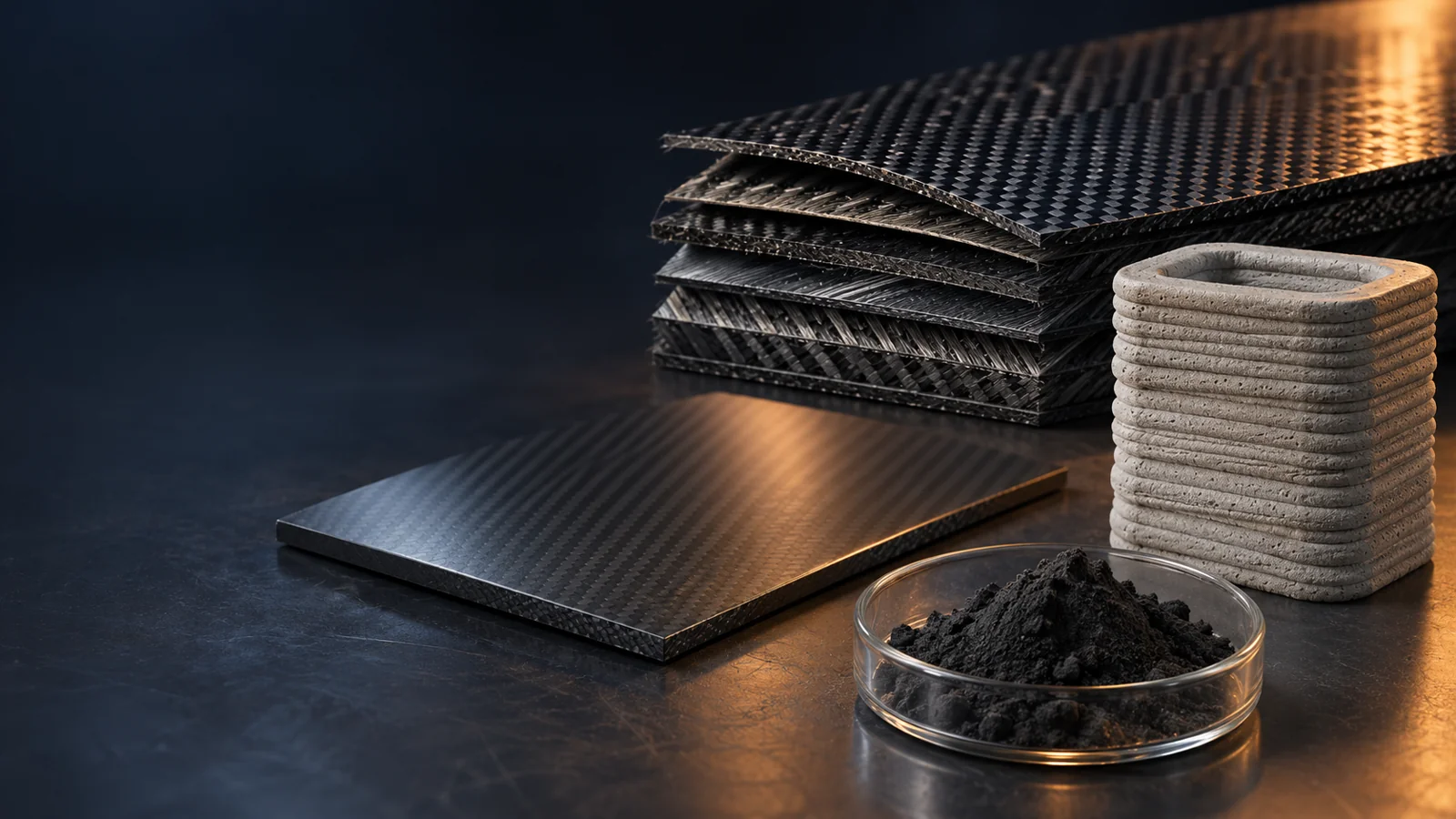
Sovereign Systems manufactures the hard parts. Launch-scale composite structures for flight, and 22,000 psi printed concrete for the places that have to stand.
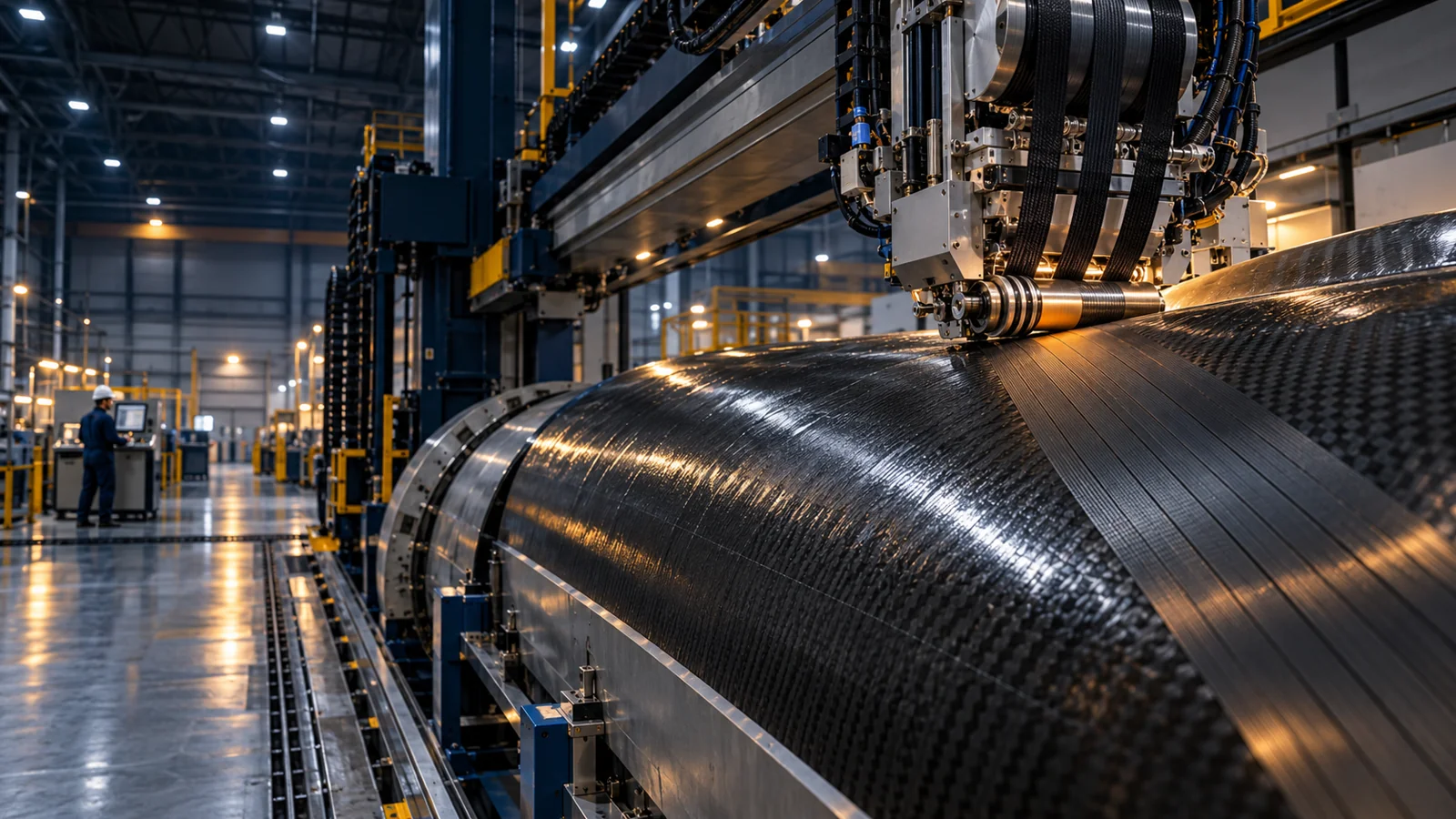
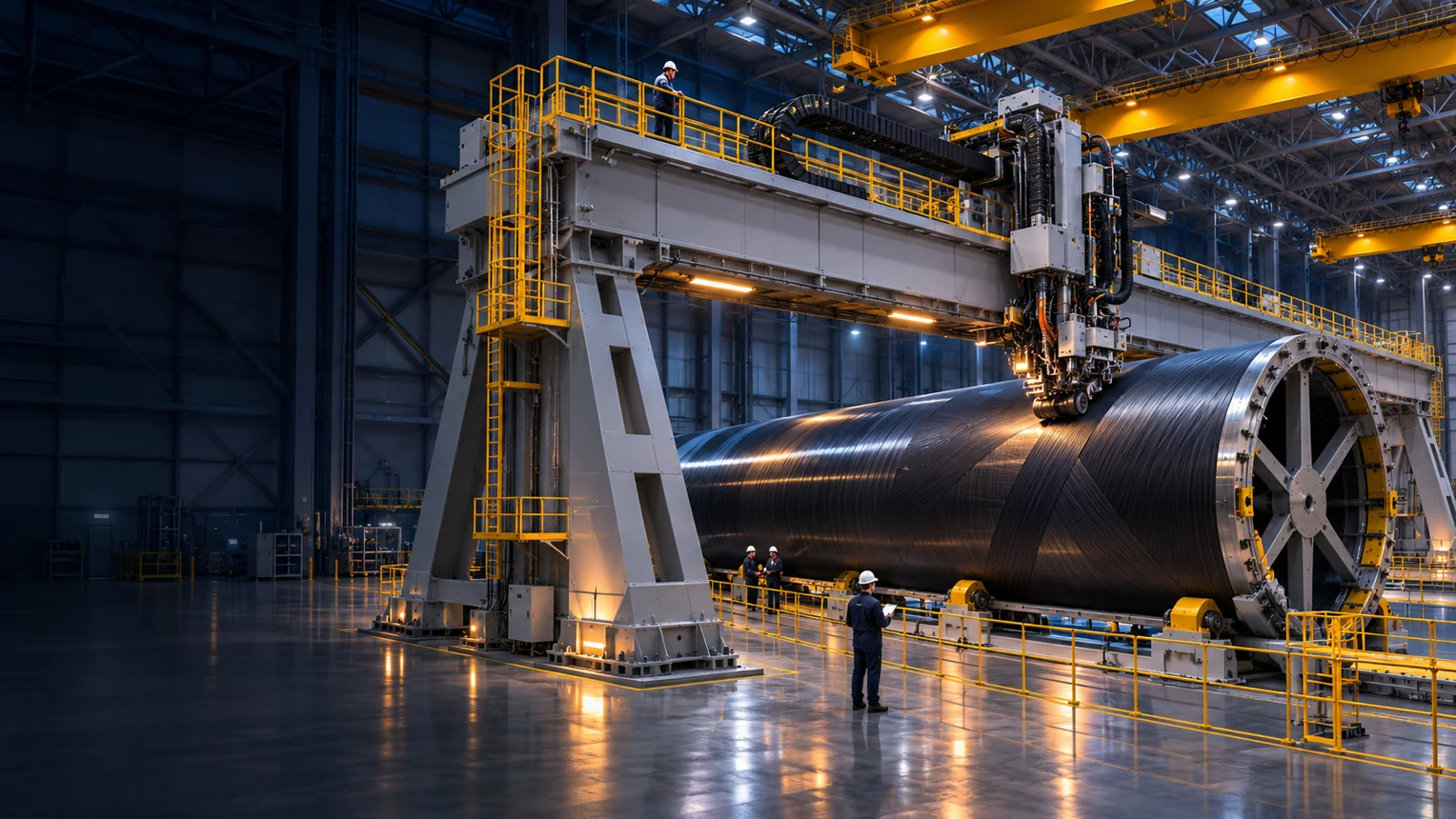
An automated fiber placement gantry lays carbon tape across a rotating mandrel at +45°, −45°, hoop and axial. Then the barrel moves through cure, trim, drill and metrology on the same dimensional reference, so the part that leaves the floor matches the part that was designed.
Robotics, toolpath planning, materials science and a traceable production record are shared across every Sovereign line. What we learn laying a barrel makes the next wall better, and the reverse.
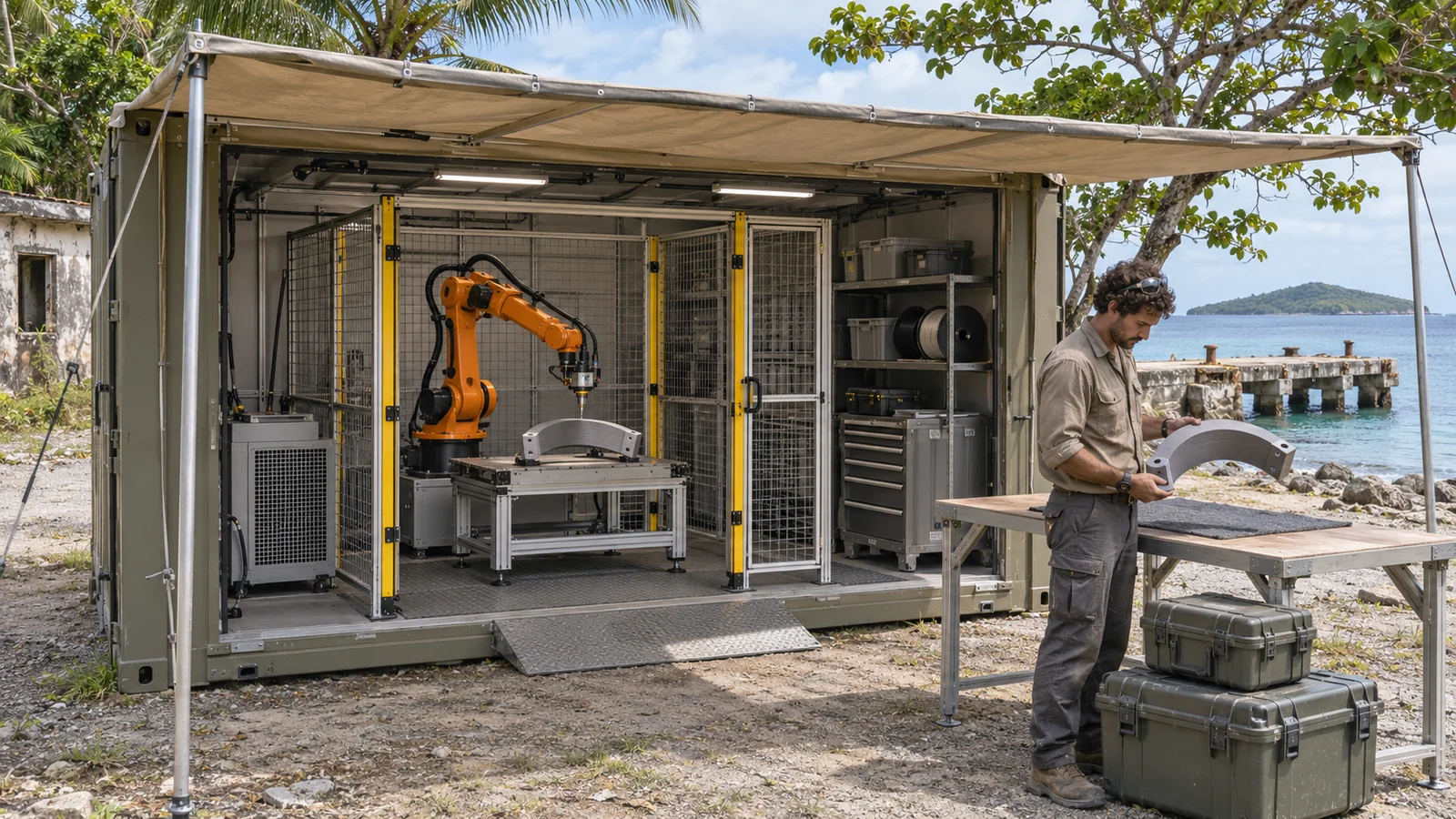
A military-grade ballistic concrete formulated for low radio-frequency signature, placed by a portable rail printer light enough to move without a crane. The wall is printed on site, at the point of need.
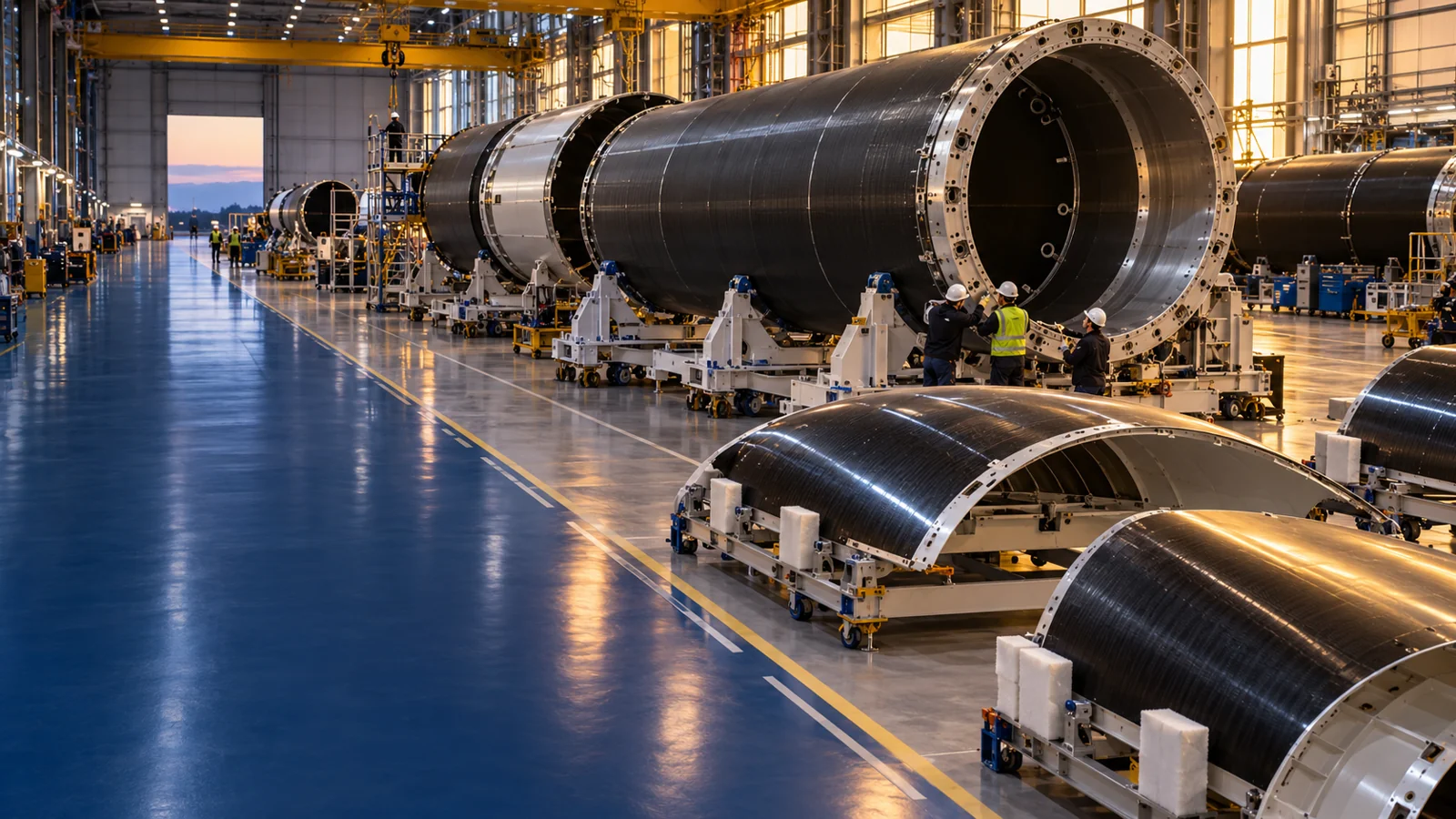
Barrels, tools and printed specimens move down one floor, under one quality system, on one record.
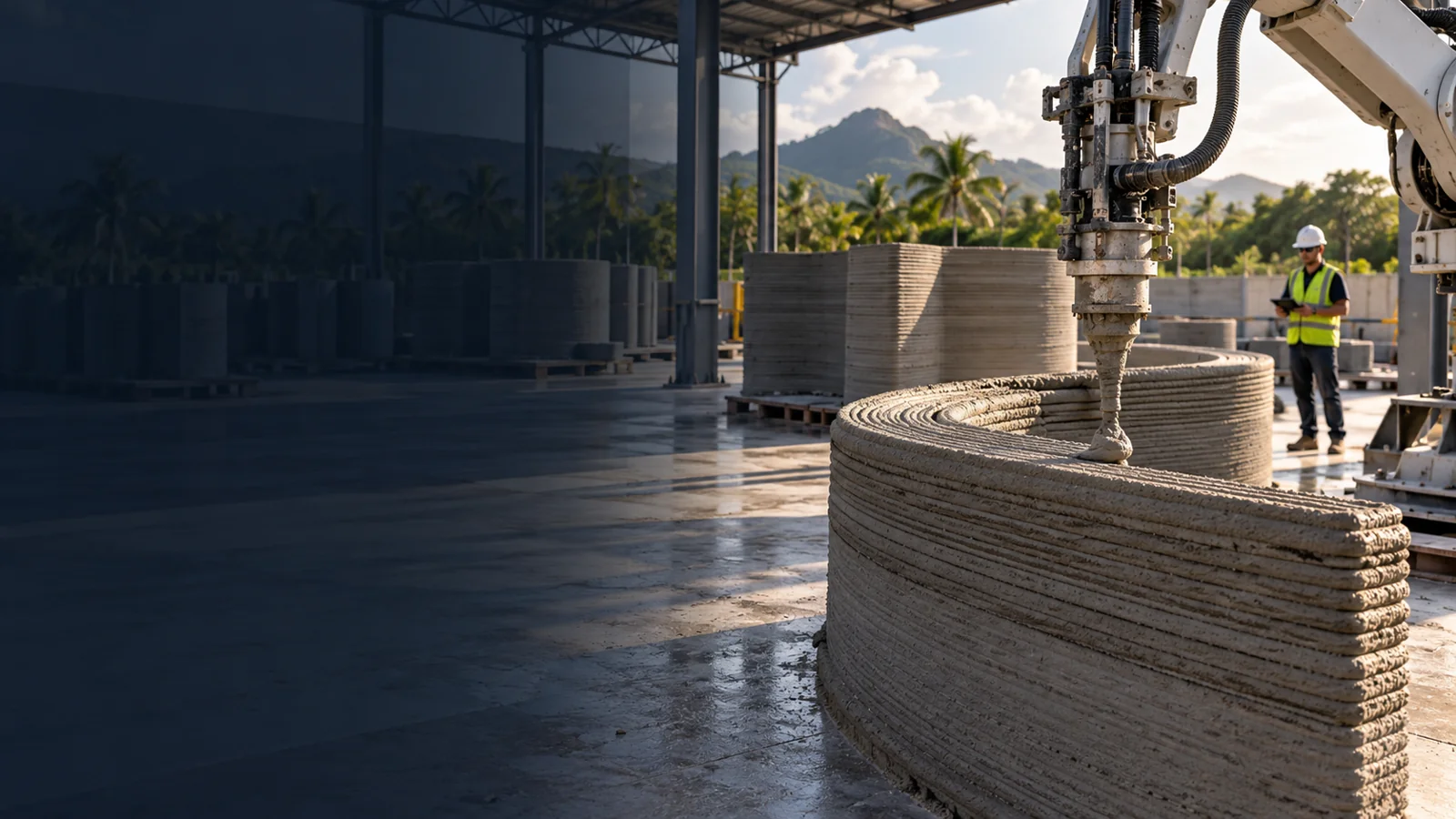
Most protective structures are cast in heavy formwork and wait weeks for crews and cranes. Sovereign prints them. A rail-guided printer under 500 lb lays a 22,000 psi cementitious system bead by bead, with curves, openings and service paths placed exactly where the drawing puts them.
Compressive strength certified by a national concrete company: 7,300 psi base material and 22,000 psi hardened mix. Low-RF formulation, with RF, EMI and nuclear research continuing at Texas A&M.
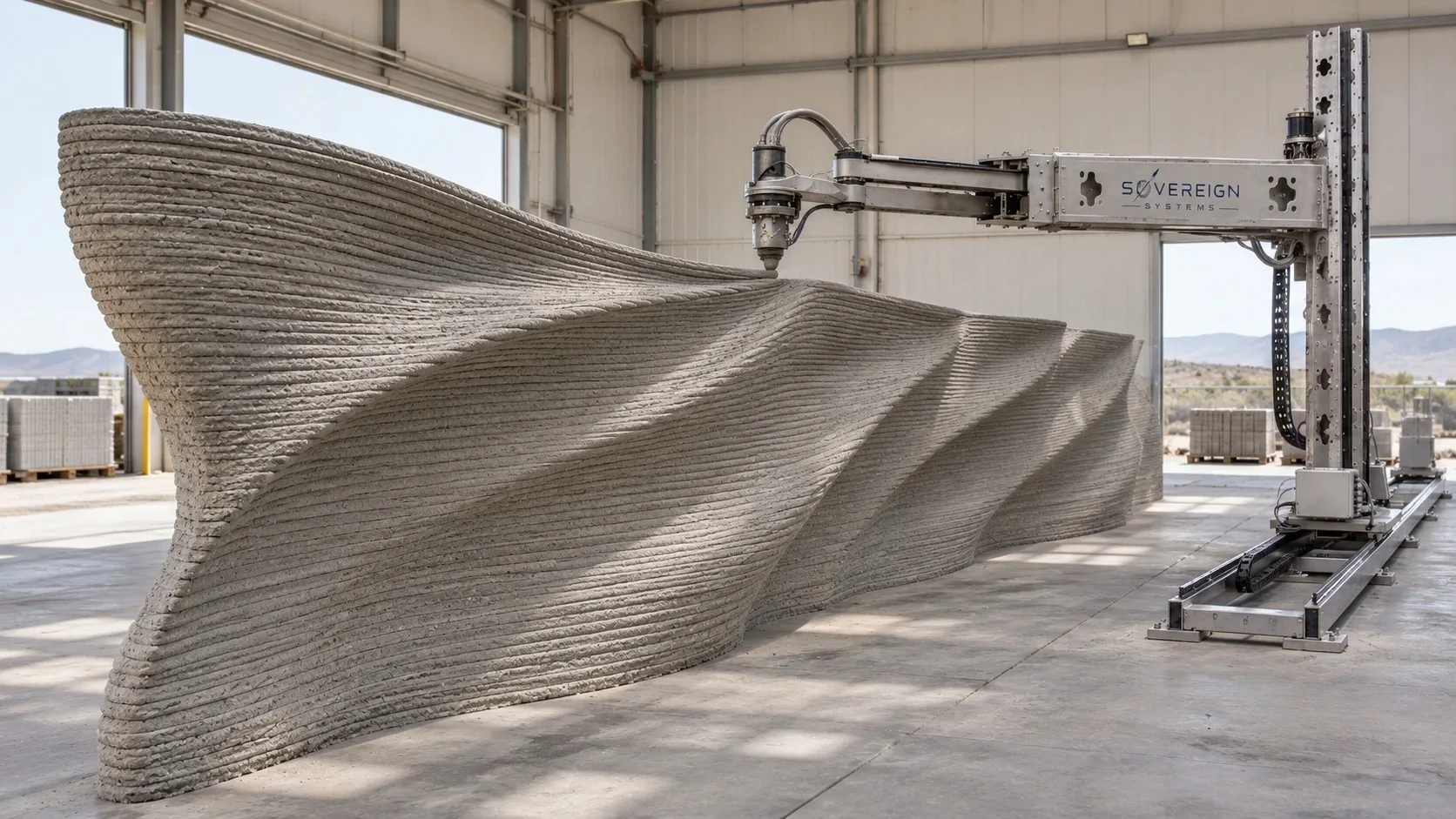
Printed protective shells for strategic assets and the systems that support them.
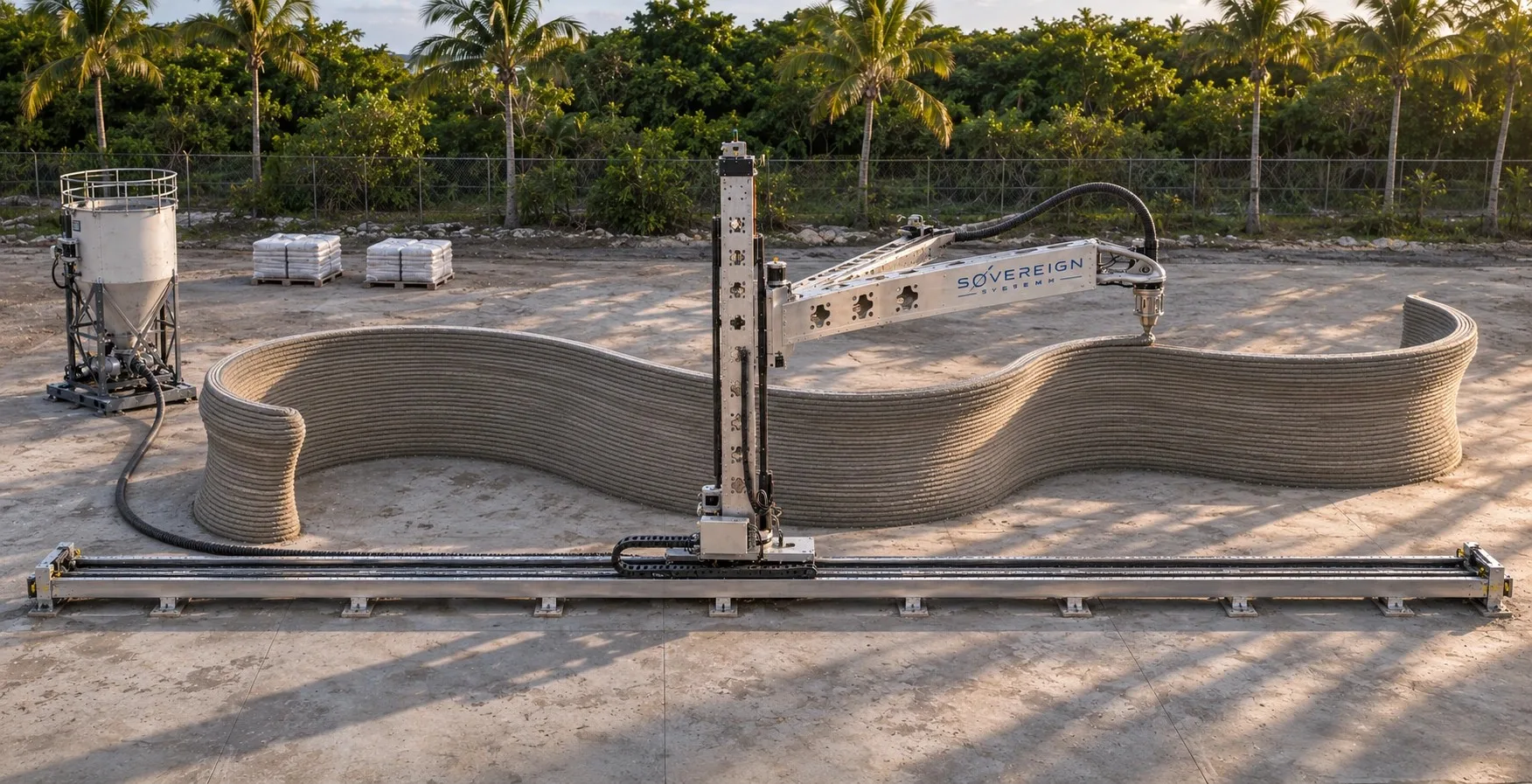
Walls formulated to limit radio-frequency signature around sensitive electronics.
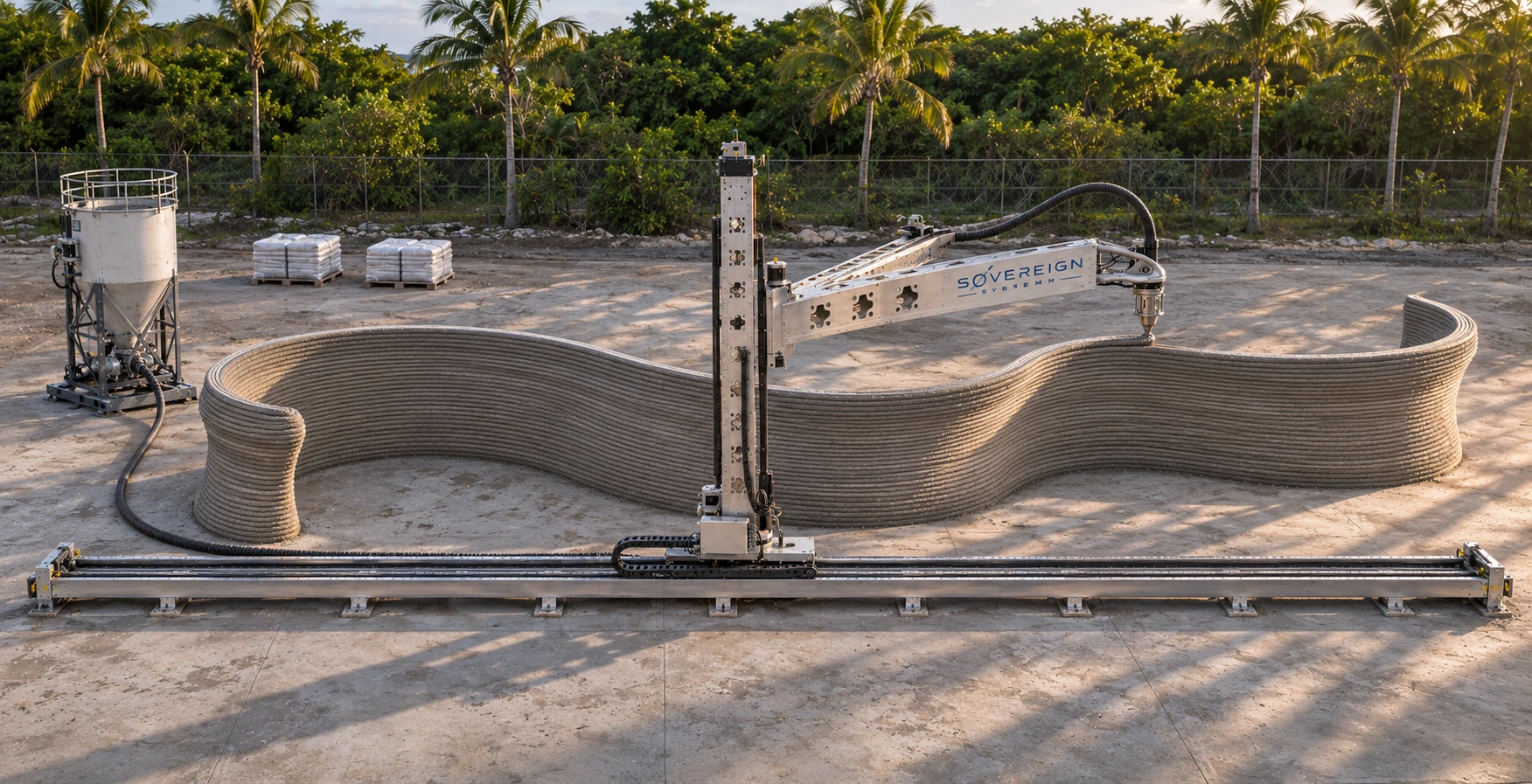
Curved perimeter and shoreline walls printed in continuous runs on prepared ground.
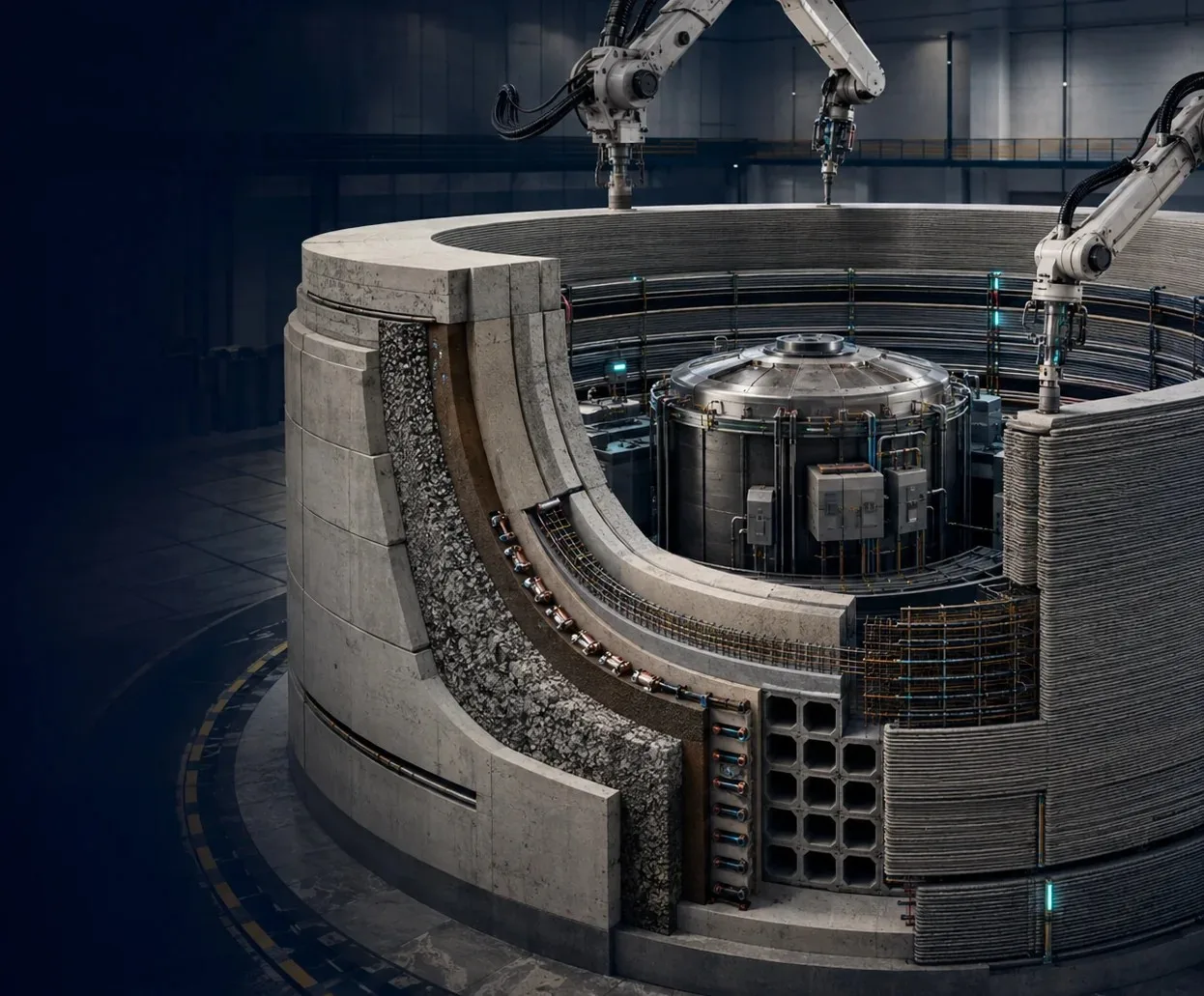
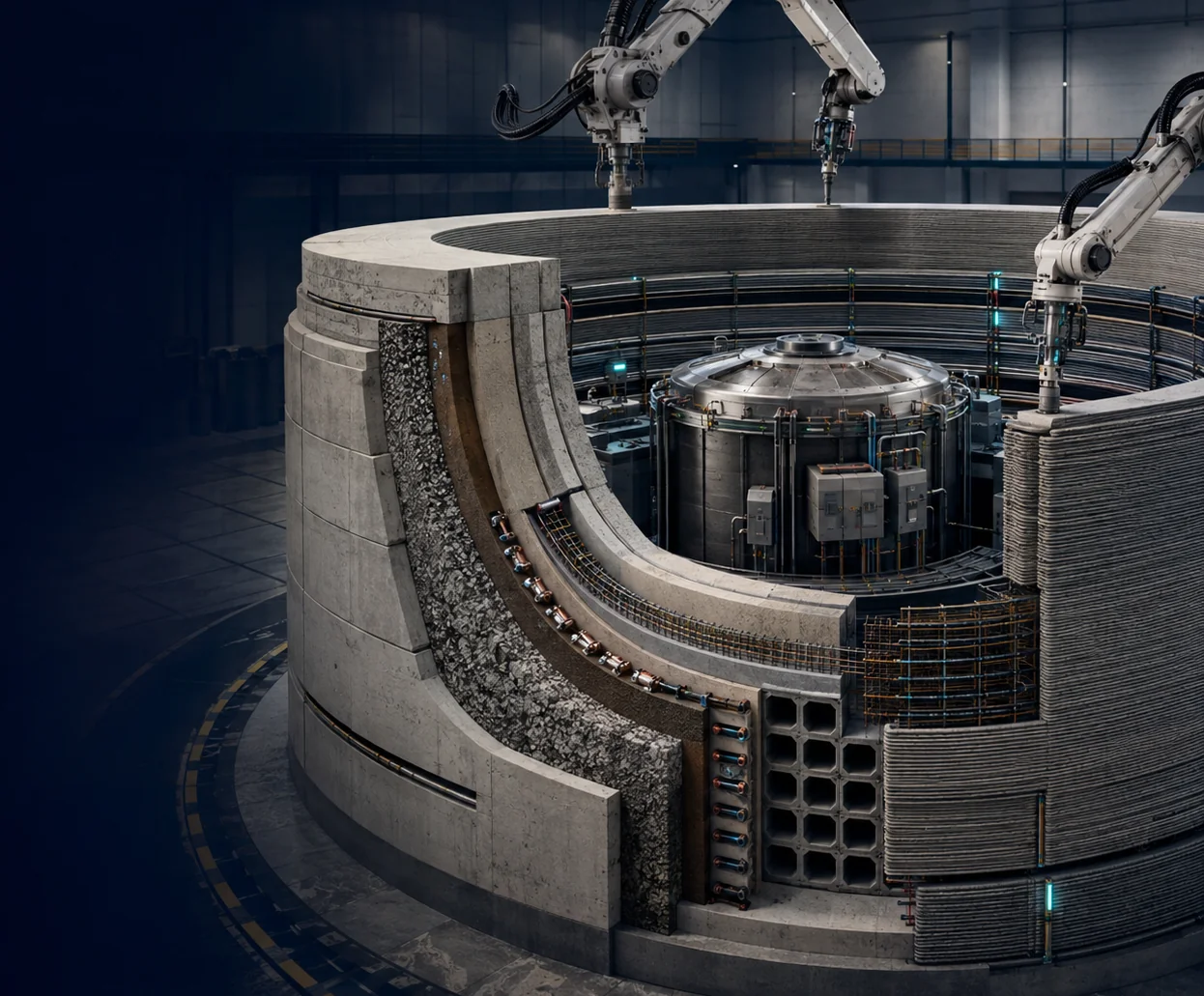
Printed permanent formwork with a cast core, in research for microreactor sites.
A launch barrel can clear design review and still wait months for a tool or a cure slot. Sovereign plans the whole route, from the mandrel to the final inspection, so faster layup doesn’t just move the bottleneck downstream.
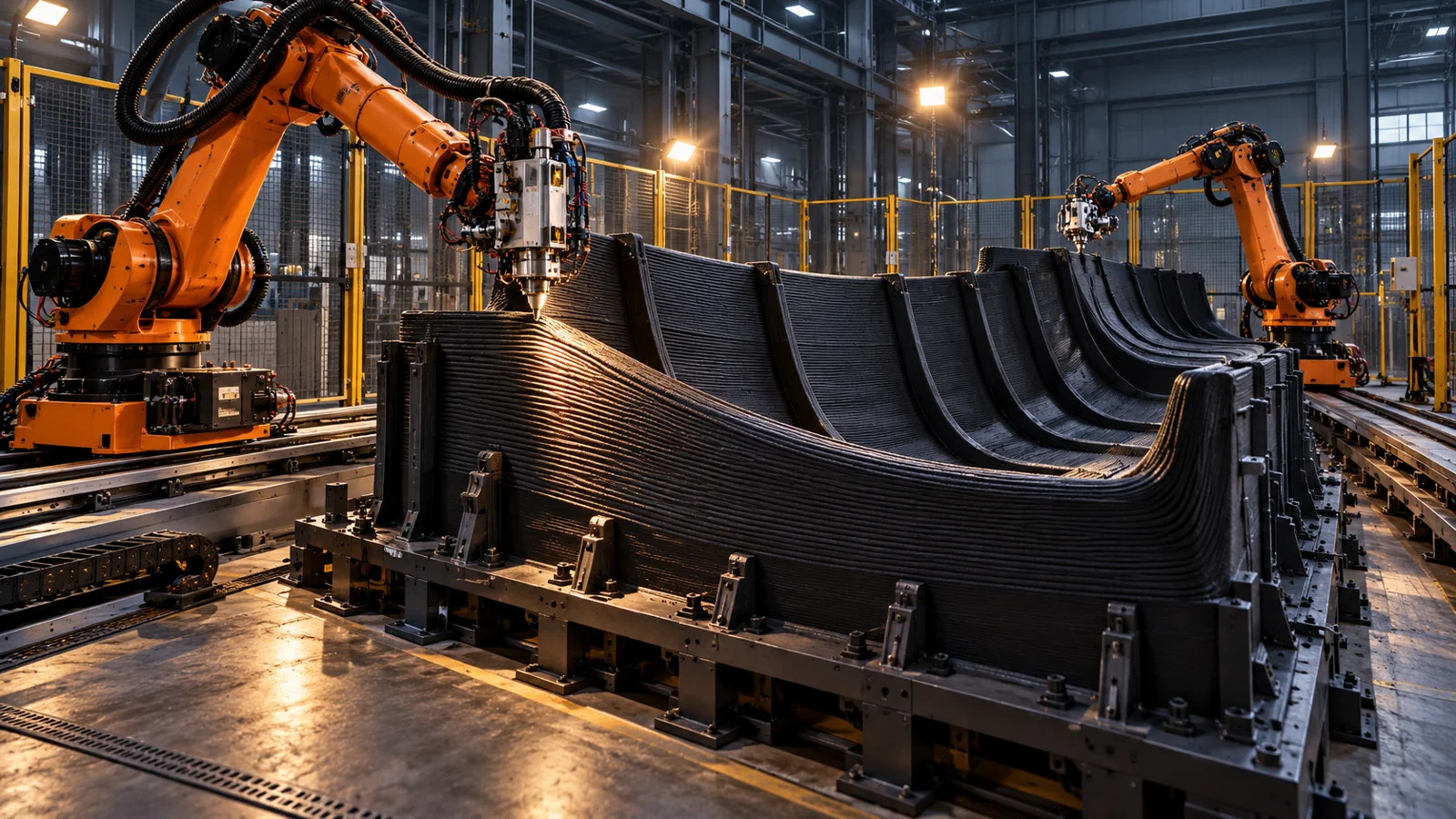
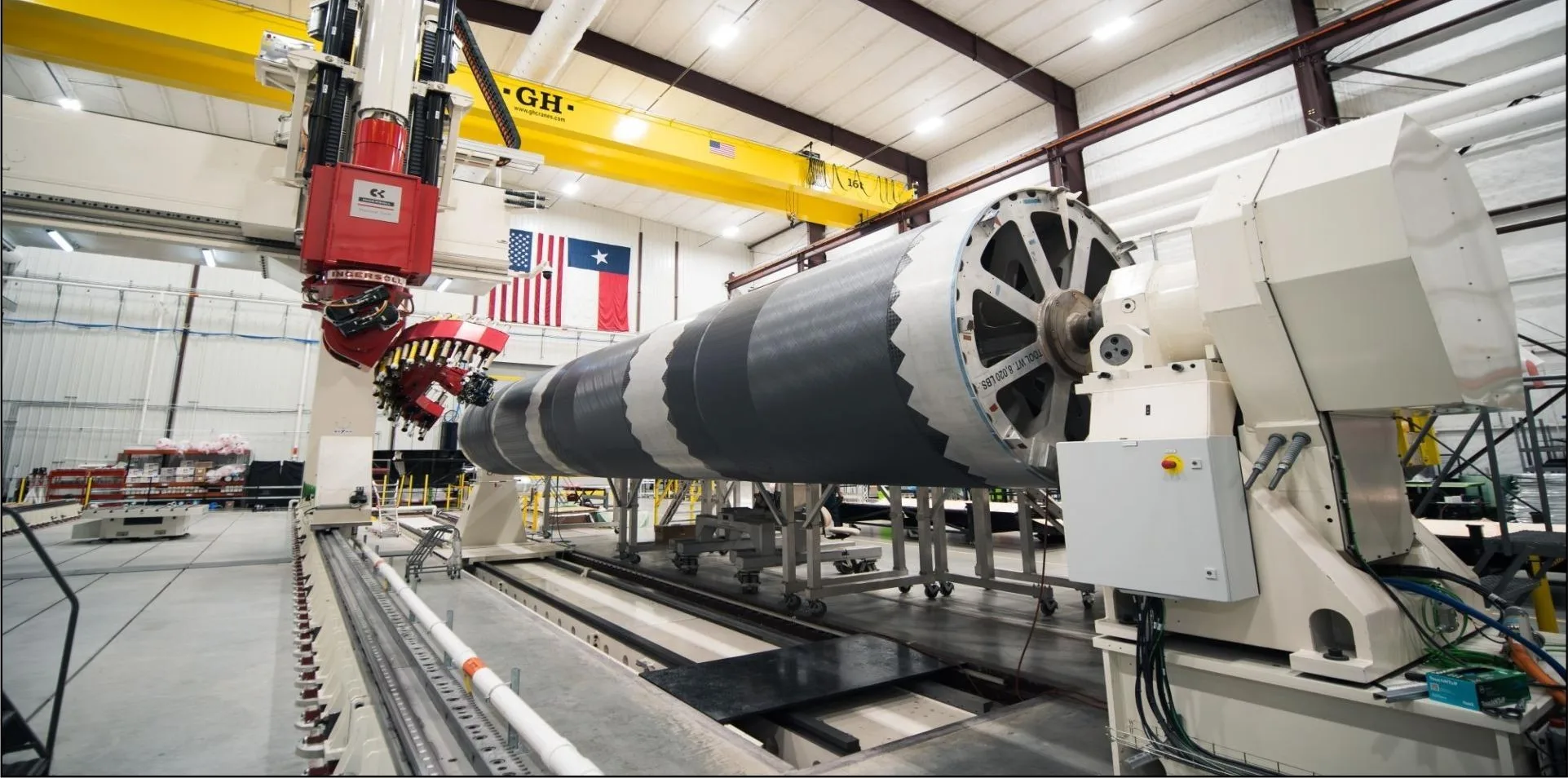
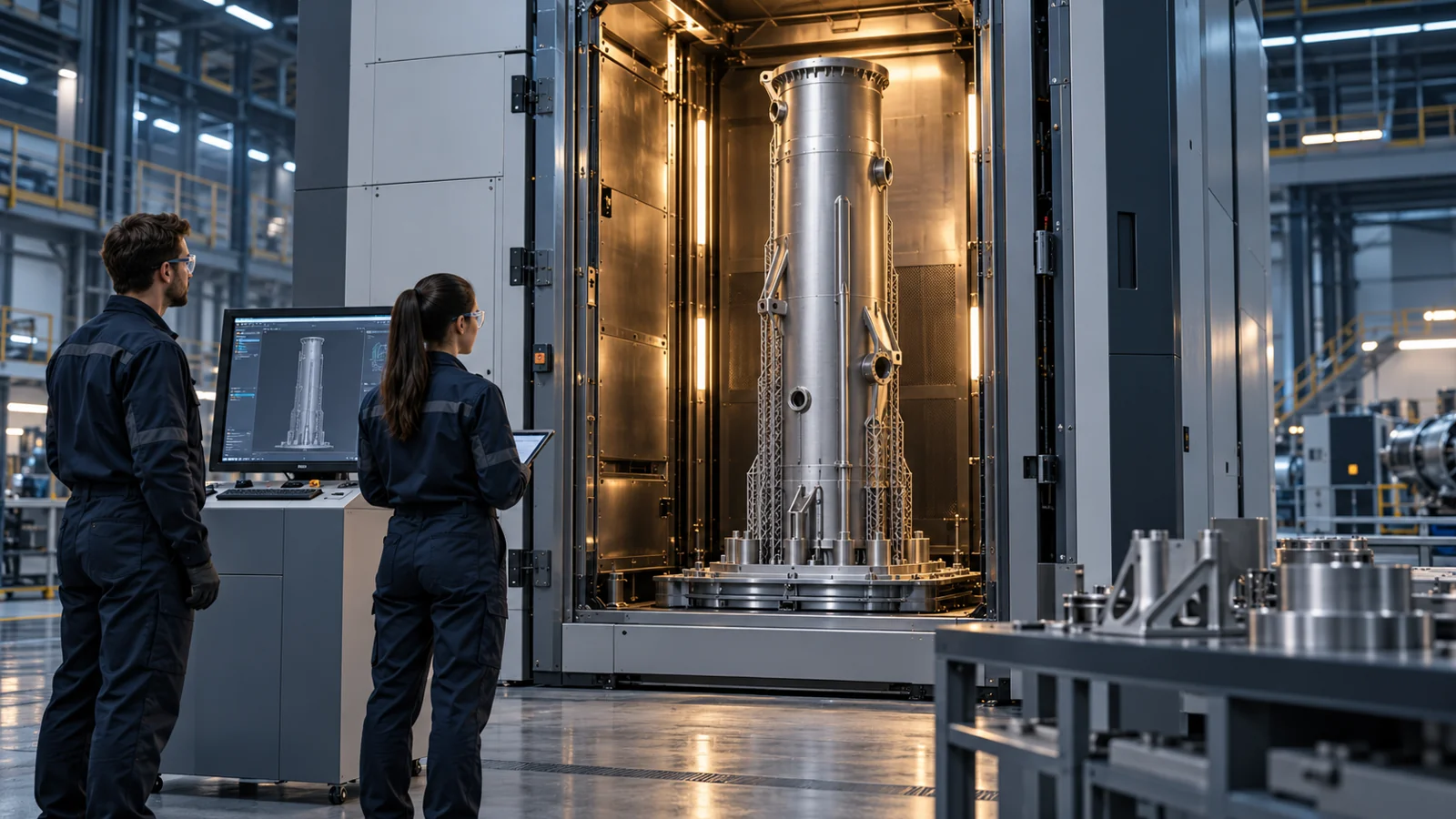
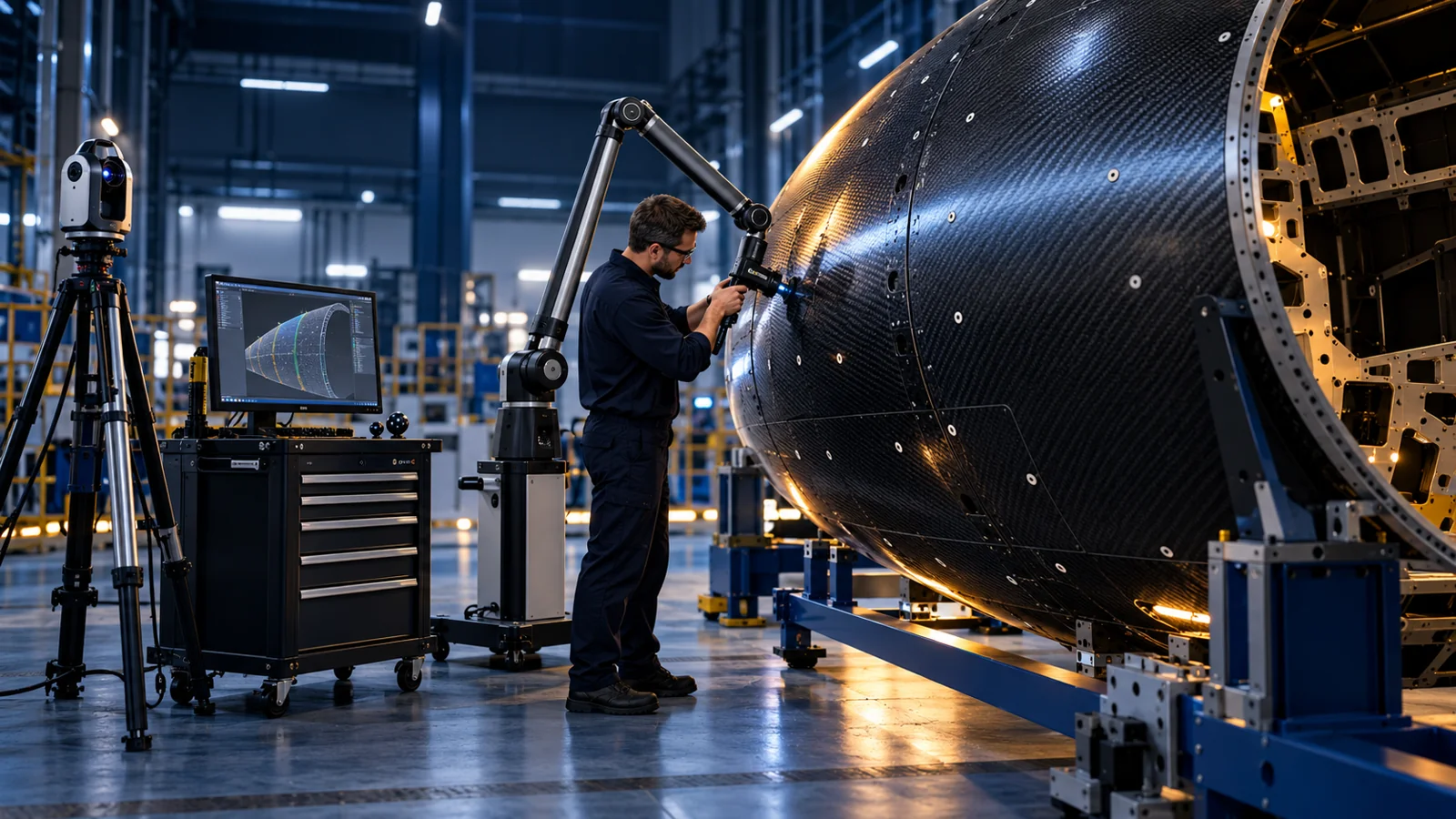
Ingersoll system transferring from OEM Defense Manufacturer, anchoring barrels, shells, fairings and tooling.
Custom build-height target for larger metal parts with fewer assembly interfaces.
Directed-energy and wire-arc additive for feature addition, blanks and tooling.
Geometric interlocking methods so multiple robots can print one large tool.
Sovereign Core is the shared engineering, robotics and evidence layer. Each platform applies it to a different environment. Select one to see where it stands.
A digital birth certificate is written while the structure is made, not reconstructed afterwards. Material batch, toolpath, layer, environment and inspection results stay attached to a location in the part. When an engineer asks what happened at a specific point in a wall or a barrel, the answer is already there.
The pieces are coming together in parallel: production equipment from OEM Defense Manufacturer, a launch-company partner in Space Rocket Manufacturer, a research network at Texas A&M and Oak Ridge to prove the materials, and a campus on the Space Coast to put it in.
Equipment-transfer agreement for the large Ingersoll AFP system. Relocation and retrofit come next.
NDA in place and a manufacturing joint venture in development for launch-vehicle structures.
GENIE interlocking print interfaces, cooperative print planning, and RF, EMI and nuclear materials validation.
Materials research and modeling supporting DOE engagement.
Evaluating a Florida Space Coast site near Port Canaveral for oversized aerospace hardware.
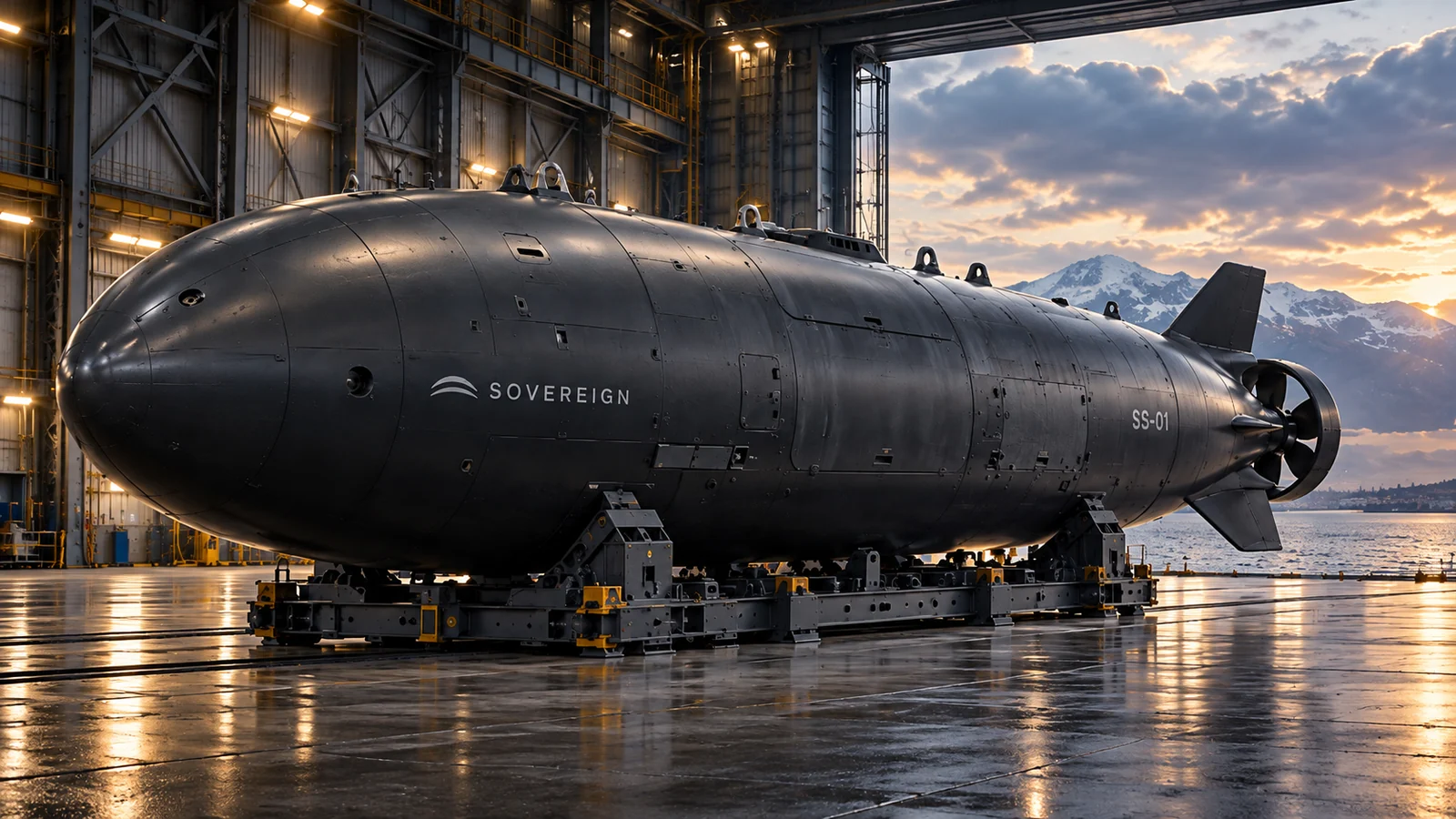
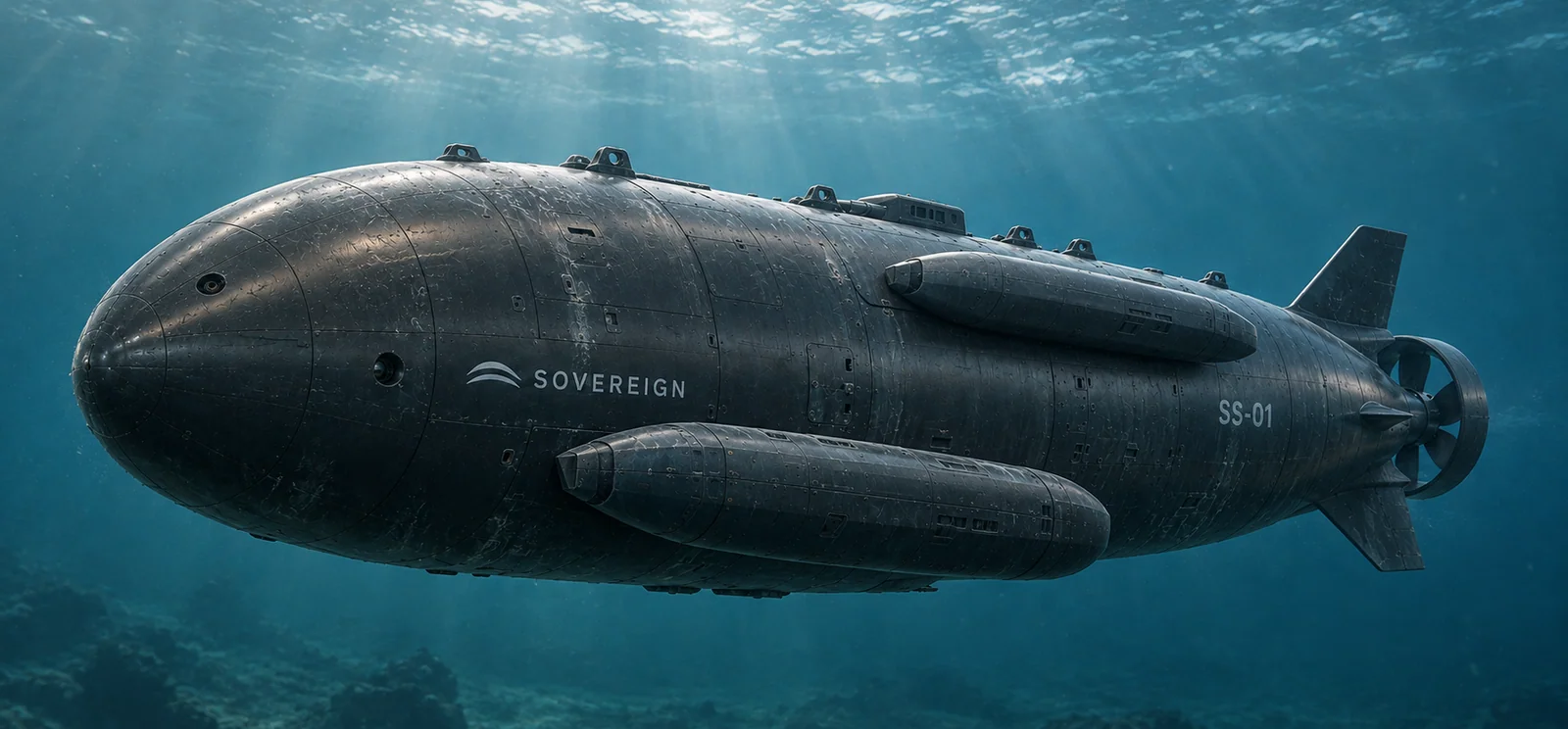
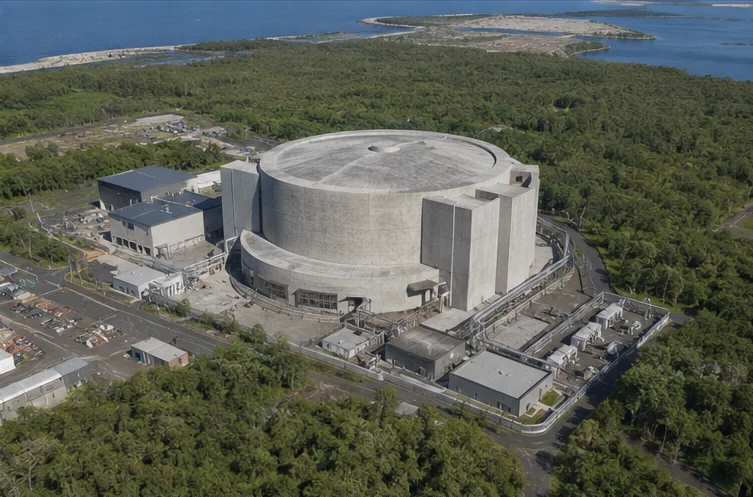
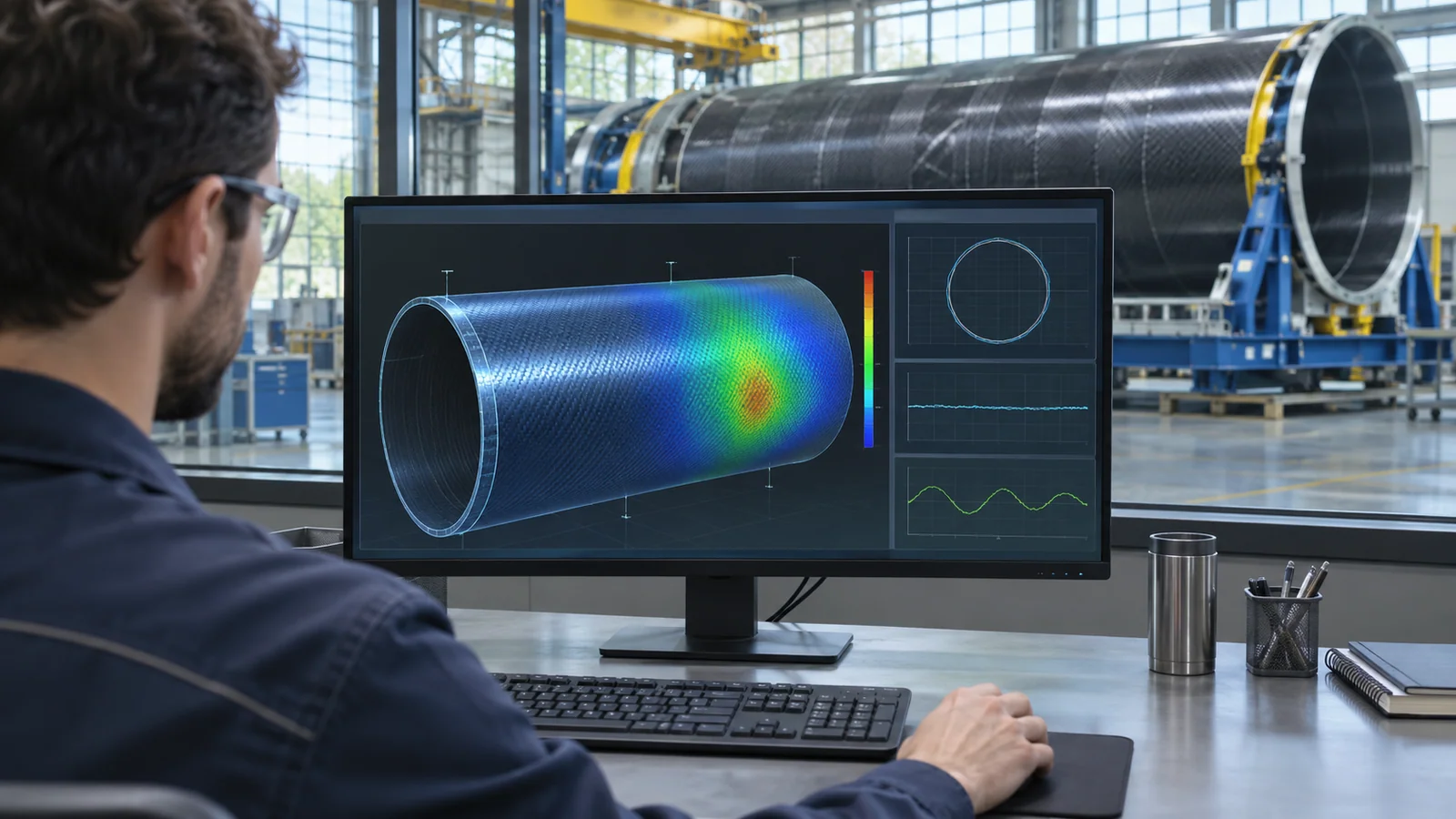
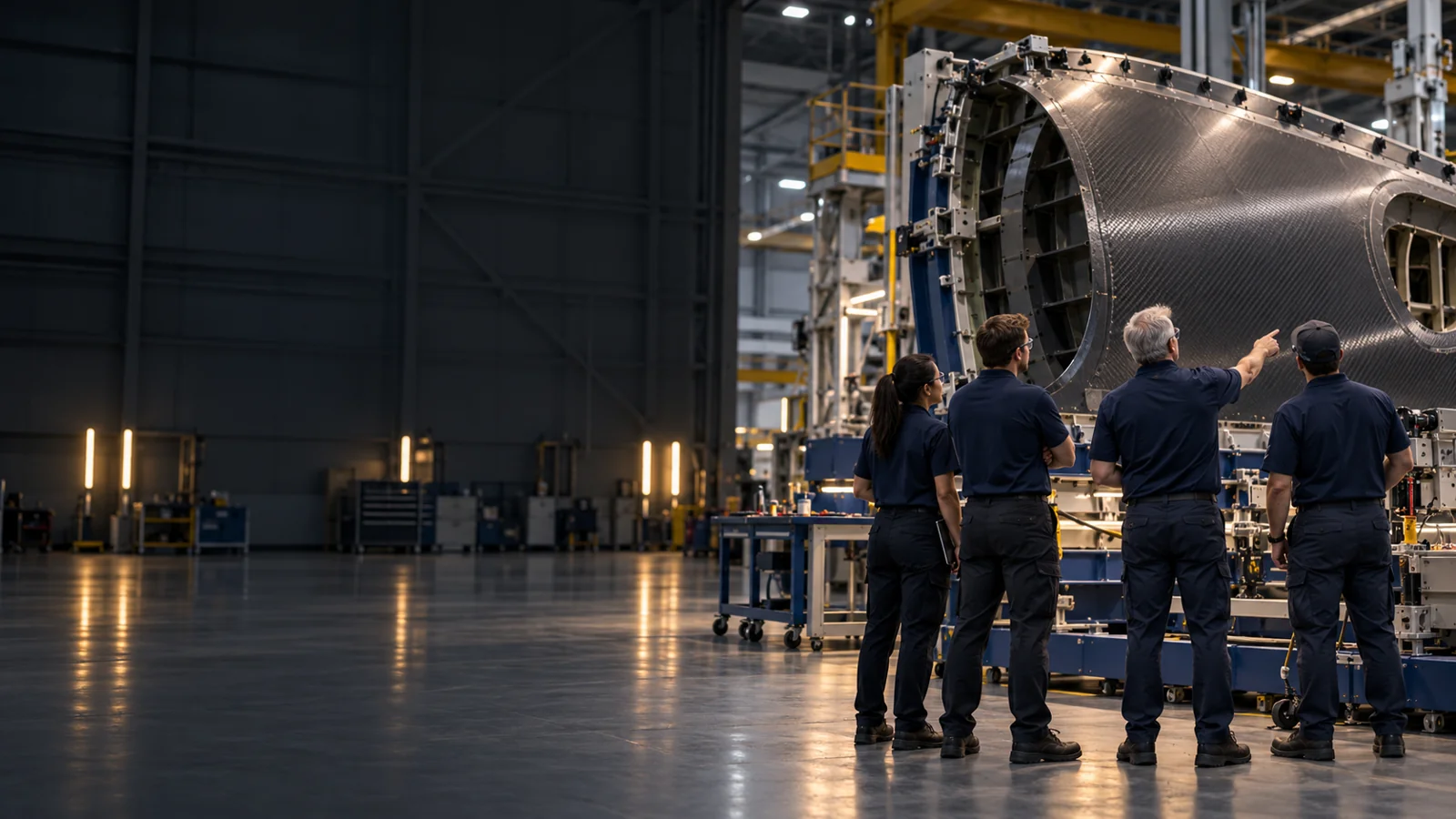
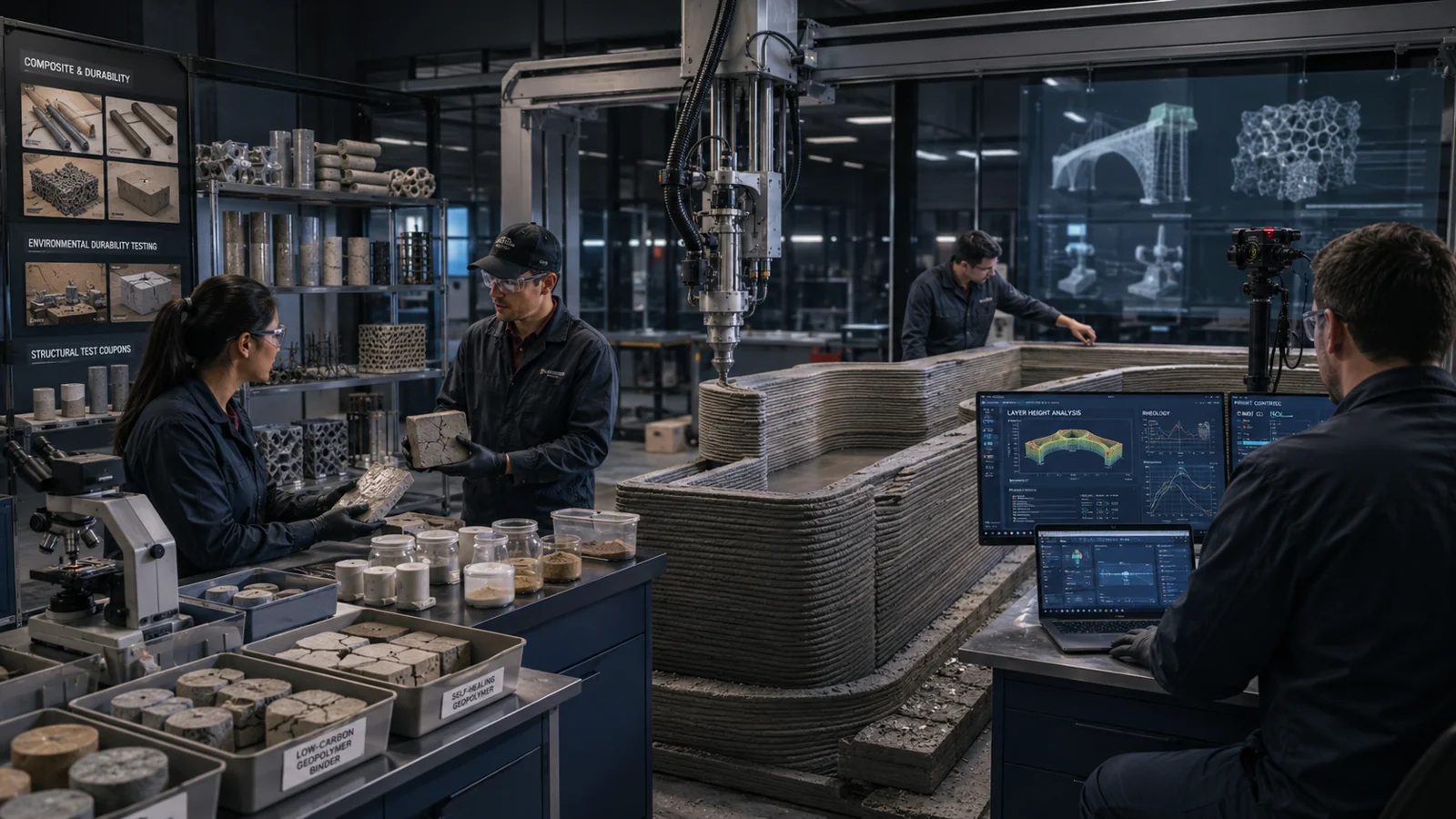
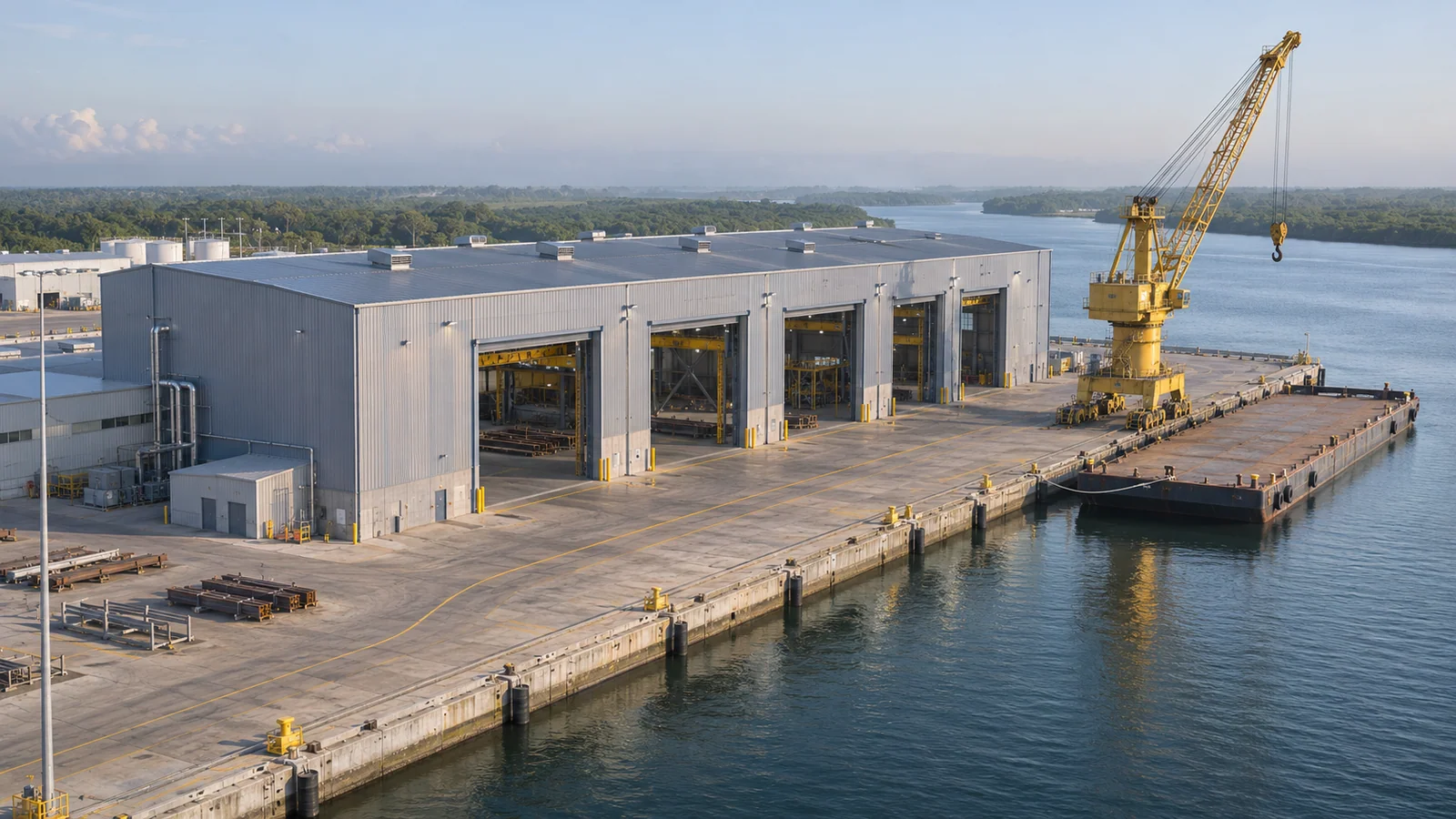
A launch-scale campus on Florida’s Space Coast, with quay access for barrels and structures too large for the road.
Bring us a part family, a tooling bottleneck, a wall section or a site constraint. We work with qualified aerospace, defense, advanced-energy and investment partners.